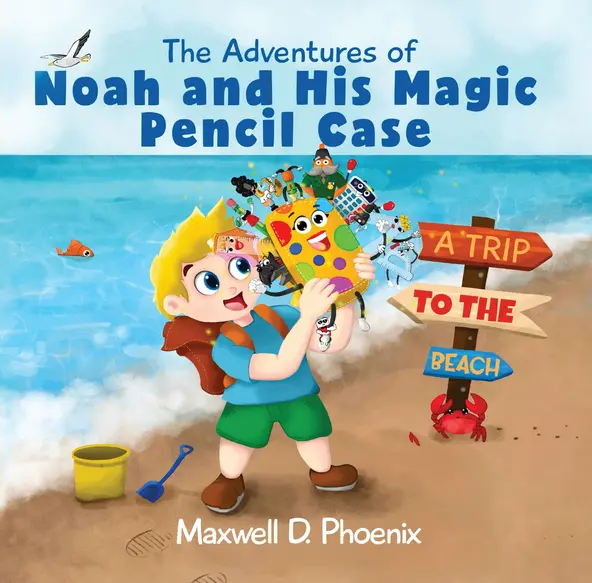
In the delightful children’s book The Adventures of Noah and His Magic Pencil Case by Maxwell D. Phoenix, everyday objects like pencils, rulers, and calculators come to life and become characters in a magical adventure. The story not only captivates readers with its engaging plot but also encourages them to see the world through a more imaginative lens. By turning mundane items into animated, lovable characters, the book sparks creativity and inspires young minds to think about the objects around them in new and exciting ways.
The Magic of Everyday Objects
The beauty of The Adventures of Noah and His Magic Pencil Case lies in how it takes everyday items—such as pens, staplers, and protractors—and transforms them into magical friends with distinct personalities and traits. For example, Noah’s pencil case is filled with characters like Donald the Stapler, who loves to explore, and Shamus the Rubber, who has a big dream of building the best sandcastle. Even items like Cassius the Calculator and Paula the Protractor have their own unique voices, and they each contribute to the story in meaningful ways.
This clever approach encourages children to reimagine the ordinary objects they use every day. Suddenly, a pencil is no longer just a tool for writing but a potential character with its own adventures. A ruler isn’t just a measuring device but a loyal companion with distinct features and abilities. The idea that everyday objects can be magical beings helps kids recognize that their world is full of unexplored possibilities, making it a playground for imagination.
Inspiring Creative Thinking
When children read about how these items come to life and interact with Noah, they are inspired to think creatively about their own possessions. What would happen if their backpack or lunchbox could talk? Would their shoes have a special power? This concept encourages children to invent their own stories, using the objects around them as the foundation for their adventures.
One of the most powerful aspects of this book is that it doesn’t just rely on fantasy creatures or talking animals to engage children’s imaginations—it draws from the everyday items that children already know and interact with. This familiarity makes the magical transformations feel more accessible, allowing children to easily slip into the world of storytelling and explore their own ideas.
Sparking Conversations About Perspective
The idea of giving life to inanimate objects can also help children understand different perspectives. When everyday items are transformed into characters with distinct personalities and feelings, children are encouraged to consider how those objects might “feel” or “think.” For example, how would a pen feel about being used to write notes or a calculator feel when it’s used to solve a tricky math problem? By considering the perspective of the objects in Noah’s pencil case, children start to develop empathy and a deeper understanding of the world around them.
In addition, this kind of imaginative thinking can foster problem-solving skills. In the book, Noah’s friends work together to escape tricky situations, such as hiding from an angry seagull. By seeing how these objects collaborate, children learn the importance of teamwork and resourcefulness, both essential qualities when solving problems in real life. In The Adventures of Noah and His Magic Pencil Case, everyday objects are transformed into magical, relatable characters that teach children to see their world in a more imaginative light. By rethinking the ordinary and considering how inanimate objects could have their own personalities, children are encouraged to use their creativity, develop storytelling skills, and think outside the box. This story reminds us that imagination isn’t just about mythical creatures or faraway lands—it can be sparked by the everyday items we interact with daily. By encouraging children to look at the world with wonder, the book opens up endless possibilities for creativity, fun, and learning.