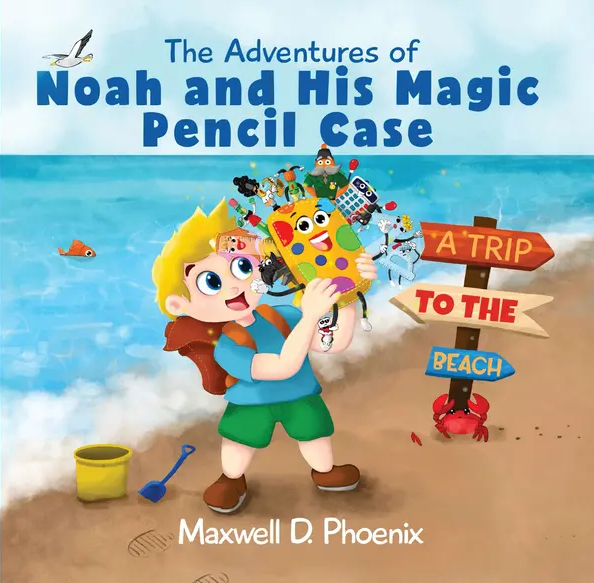
In the early years of a child’s life, the foundation for critical thinking and problem-solving is laid through play and storytelling. Maxwell D. Phoenix’s enchanting book, “Noah and His Magic Pencil Case,” serves as a perfect example of how adventure stories can foster these essential skills in young minds. Through the thrilling exploits of Noah and his magical pencil case friends, children are introduced to the concepts of creative thinking, resourcefulness, and teamwork.
Adventure as a Catalyst for Learning
Children are naturally curious and adventurous. Stories that engage their sense of adventure capture their attention and fuel their imagination. In “Noah and His Magic Pencil Case,” Noah’s journey to the beach with his animated school supplies transforms a simple day out into an extraordinary adventure. This narrative setup not only entertains but also encourages children to see the world around them as a place full of possibilities and challenges to be explored.
Developing Problem-Solving Skills
Problem-solving is at the heart of Noah’s adventures. When Donald the Stapler accidentally angers a crab, or when the friends must hide from a hungry seagull, Noah and his companions must think quickly and work together to find solutions. These scenarios provide clear, relatable examples of problem-solving in action. Children learn that problems are a part of life and that they can be overcome with ingenuity and cooperation.
For instance, when the seagull threatens the group, the characters don’t panic. Instead, they use their surroundings—a yellow bucket—to devise a clever hiding spot. This teaches children to use their environment and resources creatively, an essential aspect of critical thinking. By seeing characters overcome obstacles, young readers are inspired to approach their own challenges with a similar mindset.
Encouraging Critical Thinking
Critical thinking involves analyzing situations, making decisions, and reflecting on the outcomes. Through Noah’s beach adventure, children see these processes in action. When Noah’s friends work together to tip over the bucket, they are engaging in critical thinking. They assess the threat, brainstorm potential solutions, and execute their plan, learning from the experience regardless of the outcome.
Moreover, the diverse personalities of Noah’s pencil case friends, each with their own strengths and weaknesses, demonstrate the value of different perspectives and collaborative thinking. Children see that multiple viewpoints can lead to better solutions, fostering an appreciation for teamwork and collective problem-solving.
The Role of Storytelling in Skill Development
Storytelling is a powerful tool for teaching critical thinking and problem-solving. Through engaging narratives, children can explore complex ideas in a context that is both entertaining and understandable. “Noah and His Magic Pencil Case” by Maxwell D. Phoenix exemplifies how a simple, imaginative story can introduce young readers to important cognitive skills.
By following Noah and his friends, children are not only entertained but also encouraged to think critically and solve problems creatively. The adventures in the book act as a mirror for real-life situations, providing a safe space for children to experiment with ideas and learn from the characters’ experiences.
Fostering a Growth Mindset
The book also promotes a growth mindset, showing children that making mistakes is a part of learning. When Donald the Stapler’s sneeze leads to an encounter with a crab, it’s an opportunity for the characters to learn and adapt. This reinforces the idea that challenges and setbacks are not failures but rather steps in the journey of learning and growth.
Conclusion
“Adventure and Problem-Solving: Encouraging Critical Thinking in Young Minds” underscores the importance of stories like “Noah and His Magic Pencil Case” in child development. Maxwell D. Phoenix’s book is a delightful reminder that adventure and learning go hand in hand. Through engaging narratives, children are inspired to think critically, solve problems, and approach the world with curiosity and creativity. By nurturing these skills early on, we help children build a foundation for lifelong learning and success.