In the Regency era, where words often had to remain unspoken, flowers became powerful symbols of emotion. From the shy offering of a violet to the bold statement of a red rose, blooms carried messages that could sway hearts or seal fates. This intricate language of flowers—known as floriography—was an art form, weaving unspoken sentiment into the fabric of daily life.
In Pride and Prejudice, flowers often serve as subtle backdrops to key moments. Imagine Elizabeth Bennet walking through Pemberley’s gardens, her surroundings mirroring the blossoming changes in her heart. While Austen herself didn’t explicitly delve into floriography, the Victorian obsession with flower symbolism likely found its roots in the Regency period, making it a fascinating lens through which to revisit her works.
Love, Loss, and Lilies: The Meaning Behind the Blooms
In Regency society, giving flowers was rarely a random gesture. Each bloom bore a meaning, allowing suitors to express emotions while adhering to strict codes of decorum. A bouquet of red tulips declared passionate love, while a cluster of yellow roses symbolized jealousy or waning affection. White lilies spoke of purity, while forget-me-nots pleaded for remembrance.
For the Bennet sisters, one might imagine Jane as a daisy—symbolizing innocence and loyal love—and Elizabeth as a vibrant sunflower, her sharp wit and radiance drawing Darcy’s admiration despite his initial reservations. Lady Catherine de Bourgh, with her overbearing nature, might embody marigolds, representing pain and cruelty, while Lydia’s reckless flirtations could find a parallel in bright, fleeting poppies.
Floriography in Fiction: A Tool for Storytelling
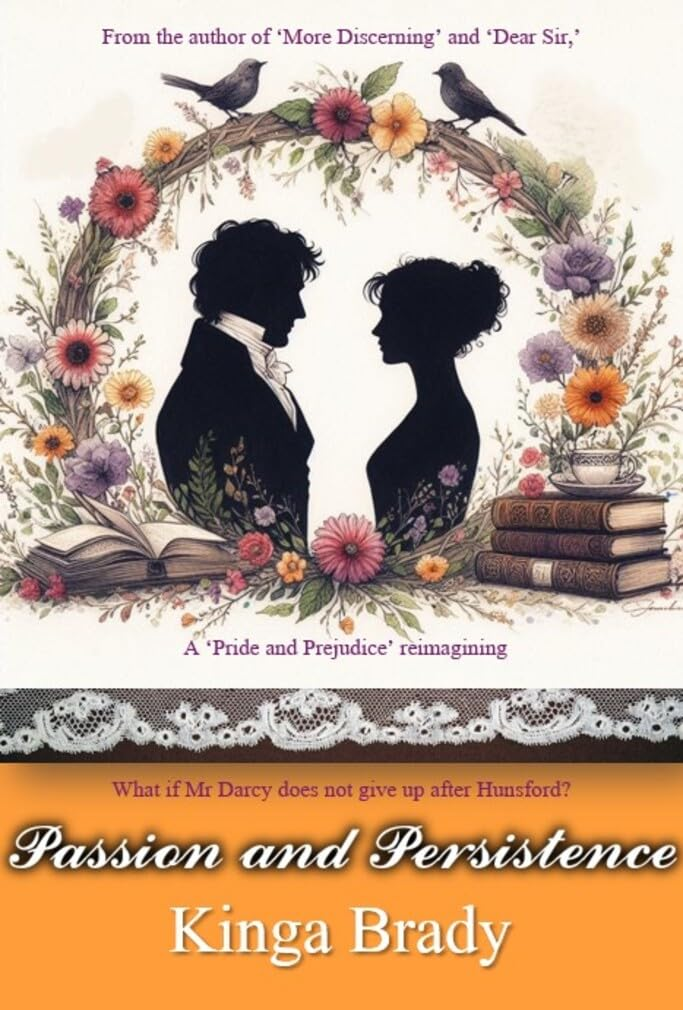
Kinga Brady’s Passion and Persistence embraces this romantic language, weaving floral symbolism into the narrative. Darcy’s courtship takes on new dimensions as he carefully selects flowers to express emotions he struggles to articulate. For Elizabeth, who is both wary and intrigued, these choices reveal a different side of the man she once scorned.
A pivotal moment in Passion and Persistence sees Darcy presenting Elizabeth with a bouquet of camellias—representing admiration and perfection. The gesture is not grand but deeply thoughtful, echoing his desire to show her the depth of his regard through actions rather than words. Elizabeth, in turn, finds herself drawn to the symbolism, questioning whether her initial judgments of Darcy were fair.
A Modern Fascination with Floriography
Today, the language of flowers continues to captivate. From wedding bouquets to garden planning, the meanings behind blooms add layers of intention and beauty. Period dramas and Regency-inspired novels frequently lean into this symbolism, deepening the emotional resonance of their stories.
For readers and writers alike, incorporating floriography into a narrative offers an opportunity to explore unspoken connections. A single bloom can carry the weight of an entire chapter’s emotions, making it a powerful tool for storytelling.
Why Flowers Endure in Regency Romance
The appeal of floriography lies in its quiet intensity. Much like the constrained yet passionate romances of the Regency period, the language of flowers offers a way to convey profound feelings without a single spoken word.
In Passion and Persistence, as in Austen’s Pride and Prejudice, this silent communication underscores the tension and transformation between characters. Whether through a bouquet left on a doorstep or the flowers surrounding a moment of revelation, blooms remind us that love often flourishes in the smallest of gestures. So, the next time you’re arranging a vase of fresh flowers or choosing a gift for a loved one, consider the story they tell. After all, in the language of flowers, every petal holds a secret—and every bloom whispers a tale of love, regret, or hope